
Adlan-Vot Tech Services
A Steel & Metal Fabrication Company.

Vertical Milling Machine
Vertical milling machines are versatile tools commonly used in various industries for a wide range of applications. Some of the key uses of vertical milling machines include:
- Milling Operations: The primary purpose of a vertical milling machine is to remove material from a workpiece through the use of rotary cutters. It can perform various milling operations such as face milling, end milling, slot milling, and drilling.
- Precision Machining: Vertical milling machines offer high precision and accuracy, making them suitable for machining intricate and complex shapes with tight tolerances.
- Metalworking: They are extensively used in metalworking industries, including aerospace, automotive, and machinery manufacturing, for cutting and shaping metal components.
- Creating Flat Surfaces: Vertical milling machines are ideal for producing flat surfaces on the workpiece, whether it’s a flat plane or a contoured surface.
- Creating Slots and Grooves: They are commonly used for cutting slots, keyways, and grooves on the workpiece.
- Cutting Threads: Vertical milling machines equipped with appropriate attachments can be used for cutting threads on screws, bolts, and other threaded components.
- Machining Irregular Shapes: With the use of rotary tables and indexing heads, vertical milling machines can produce complex shapes and contours on the workpiece.
- Prototype Development: Vertical milling machines are valuable tools for rapid prototyping, allowing engineers and designers to quickly create and test new product designs.
- Batch Production: They are well-suited for small to medium-scale batch production, providing consistent and accurate results for multiple identical workpieces.
- Education and Training: Vertical milling machines are commonly used in technical schools and training centers to teach students about machining principles and practices.
- Repair and Maintenance: In industries like maintenance and repair workshops, vertical milling machines are utilized to restore or modify damaged or worn-out components.
- Woodworking: While primarily used for metalworking, vertical milling machines can also work with various types of wood, making them useful for woodworking tasks.
- Fabrication of Custom Components: Vertical milling machines enable the production of custom parts and components for specific applications, allowing businesses to meet unique requirements.
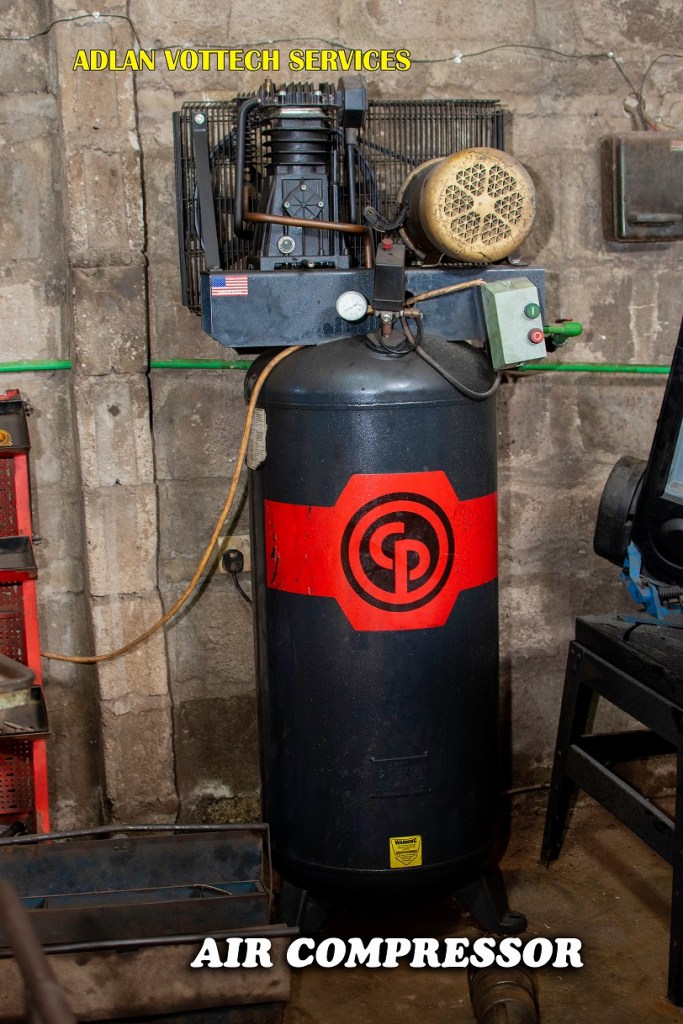
Air Compressors
Air compressors play a crucial role in a steel fabrication industry, supporting a wide range of processes and applications. Some of the key uses of air compressors in steel fabrication include:
- Powering Pneumatic Tools: Air compressors provide the necessary compressed air to operate a variety of pneumatic tools used in steel fabrication, such as air-powered grinders, drills, hammers, cutters, and riveters. These tools are essential for cutting, shaping, and assembling steel components.
- Plasma Cutting and Oxy-Fuel Cutting: Compressed air is used in plasma cutting systems and oxy-fuel cutting torches to efficiently and precisely cut through steel plates of varying thicknesses.
- Welding Applications: Air compressors power air-cooled welding torches used in certain welding processes, providing cooling to prevent overheating and maintain weld quality.
- Shot Blasting and Surface Preparation: Compressed air is utilized in shot blasting machines to propel abrasive materials onto steel surfaces, cleaning and preparing them for painting or coating.
- Pressurized Air for Forming and Bending: Air compressors are used to provide pressurized air to pneumatic presses and hydraulic systems, enabling precise metal forming and bending operations.
- Pneumatic Clamps and Fixtures: Compressed air is employed to power pneumatic clamps and fixtures, holding steel components in place during welding, machining, and assembly.
- Pneumatic Conveyor Systems: Compressed air is used in pneumatic conveyor systems to transport steel sheets, plates, and components within the fabrication shop efficiently.
- Painting and Coating Operations: Air compressors power paint sprayers used for painting steel components, ensuring even application and smooth finishes.
- Air-Assisted Lifting and Handling: Air compressors are used to power air hoists, lifters, and manipulators, facilitating the safe and efficient handling of heavy steel materials.
- Air Cleaning and Dust Collection: Air compressors are part of air cleaning and dust collection systems that maintain air quality in the fabrication shop, reducing dust and debris in the working environment.
- Pneumatic Testing and Quality Control: Compressed air is used for pressure testing welded joints and fabricated components to ensure structural integrity and quality.
- Instrumentation and Control Systems: Air compressors provide compressed air for pneumatic instrumentation and control systems used in various steel fabrication processes.
Overall, air compressors are indispensable tools in the steel fabrication industry, powering a wide array of equipment and processes that contribute to the efficient and precise fabrication of steel components and structures. They enhance productivity, improve safety, and play a significant role in ensuring the quality of the fabricated products
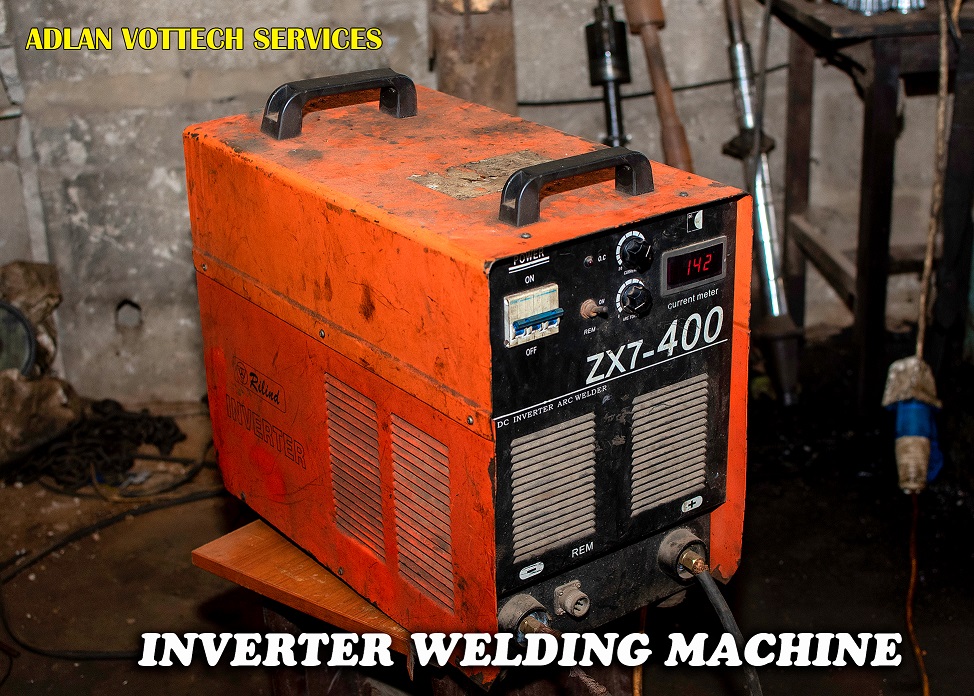
Inverter Welding Machine
Inverter welding machines have become increasingly popular in the steel fabrication industry due to their efficiency, portability, and advanced welding capabilities. These machines utilize inverter technology, which converts incoming AC power to DC power and then uses high-frequency switching to control the welding current. Here are some of the key uses of inverter welding machines in a steel fabrication industry:
- Shielded Metal Arc Welding (SMAW): Inverter welding machines are commonly used for SMAW, also known as stick welding. They provide stable and smooth welding arcs, making them suitable for various steel fabrication applications, including joining thick steel plates and structural components.
- Gas Metal Arc Welding (GMAW/MIG): Inverter welding machines can be used for GMAW or MIG welding, providing precise control over the welding current and voltage. This makes them ideal for welding thin steel sheets, pipe fabrication, and general steel assembly tasks.
- Flux-Cored Arc Welding (FCAW): Inverter welding machines are compatible with FCAW, a process similar to MIG welding but using a flux-cored wire that shields the weld pool. FCAW is commonly used in steel fabrication for welding outdoors and in windy conditions.
- Gas Tungsten Arc Welding (GTAW/TIG): Some advanced inverter welding machines support GTAW or TIG welding, which is used in steel fabrication for welding thin materials, precision welding, and critical joints requiring high-quality welds.
- Portable Welding: Inverter welding machines are compact and lightweight, making them easily portable within the fabrication shop or to remote job sites, facilitating on-site fabrication and repairs.
- Multifunctionality: Many inverter welding machines offer multiple welding processes in a single unit, allowing fabricators to switch between different welding techniques, such as SMAW, GMAW, and GTAW, based on the specific requirements of each job.
- Energy Efficiency: Inverter technology results in improved energy efficiency, reducing power consumption and operating costs in the long run.
- Generator Compatibility: Inverter welding machines are often compatible with generators, enabling their use in locations without a stable power supply, such as construction sites and field fabrication projects.
- Welding Automation: Inverter welding machines can be integrated with welding automation systems to perform repetitive and precise welding tasks in large-scale steel fabrication projects.
- Improved Arc Stability: Inverter technology provides better arc control and stability, leading to reduced spatter and improved weld bead appearance, especially crucial for aesthetic welds in architectural steel fabrication.
Overall, inverter welding machines offer significant advantages in terms of performance, flexibility, and energy efficiency, making them valuable tools in the steel fabrication industry for various welding applications
 Home
Home 