
Adlan-Vot Tech Services
A Steel & Metal Fabrication Company.
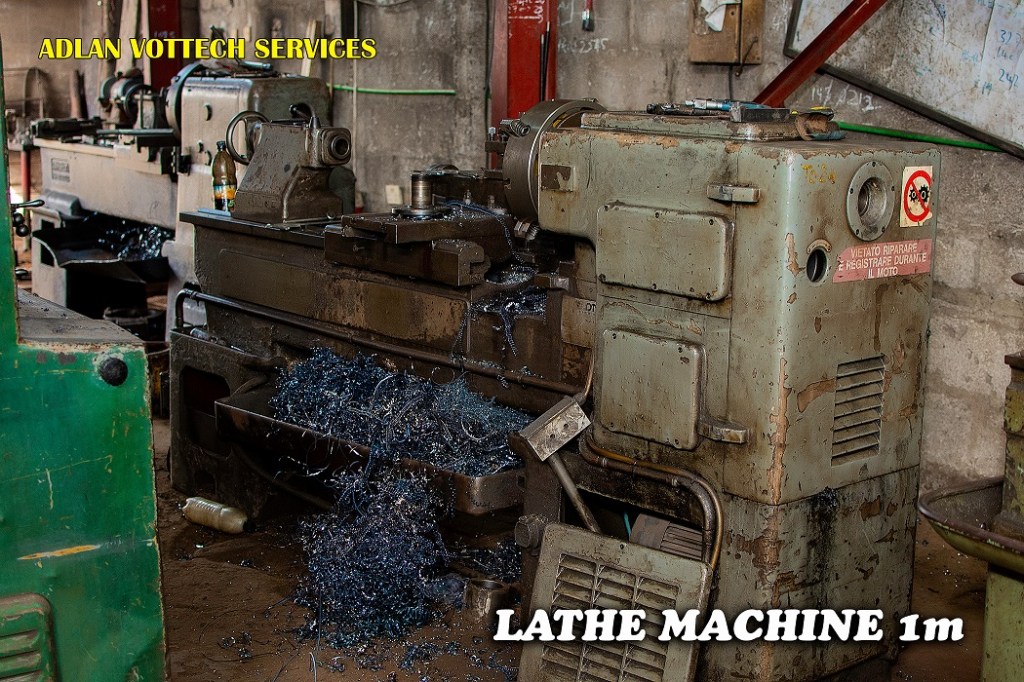
Lathe Machine
Lathe machines are essential tools in the steel fabrication industry, providing versatile machining capabilities for various tasks. They are used to shape, cut, and finish metal components with precision. Here are some of the key uses of lathe machines in a steel fabrication industry:
- Turning Operations: Lathe machines are primarily used for turning operations, where the workpiece is rotated against a cutting tool to remove material and achieve desired dimensions and surface finish. In steel fabrication, turning is used to create cylindrical shapes like shafts, rods, and pins.
- Facing: Lathe machines are used for facing operations, which involve cutting the end face of a workpiece to achieve a smooth, flat surface that is perpendicular to the axis of rotation. This process is commonly used to prepare workpieces for further machining or assembly.
- Taper Turning: Lathe machines can be used to produce tapered surfaces, such as conical shapes or chamfers, on steel components.
- Thread Cutting: Lathe machines equipped with threading tools can cut external and internal threads on steel components, such as bolts, nuts, and threaded rods.
- Boring: In steel fabrication, lathe machines are used for boring operations, creating precise and accurate holes with desired dimensions and surface finish.
- Knurling: Lathe machines can be used for knurling operations, producing a pattern of straight or diagonal lines on the surface of a workpiece for improved grip or aesthetics.
- Parting and Grooving: Lathe machines are used for parting and grooving operations, cutting off a section of a workpiece or creating grooves on its surface.
- Facing and Centering for Welding: Lathe machines are often used to prepare the ends of steel tubes, pipes, and shafts before welding to ensure proper alignment and fit.
- Machining Special Shapes: Lathe machines with special attachments can be used to machine complex shapes and profiles on steel components.
- Drilling and Reaming: Some lathe machines are equipped with drilling and reaming capabilities, allowing for precision hole-making operations in steel fabrication.
- Polishing and Finishing: Lathe machines can be used for polishing and finishing operations, achieving smooth and polished surfaces on steel components.
- Repairs and Modifications: Lathe machines are utilized for repairing and modifying existing steel components, such as resizing or restoring damaged parts.
Overall, lathe machines are indispensable tools in the steel fabrication industry, providing the ability to produce a wide range of components with high precision, accuracy, and efficiency. They contribute significantly to the shaping and finishing of steel parts used in various applications

Angle Grinder (Cable Grinder)
An angle grinder is a handheld power tool that uses an abrasive disc or wheel to cut, grind, polish, or sand different materials. In the context of the steel fabrication industry, an angle grinder can be a valuable tool for various applications:
- Cutting Steel: Angle grinders equipped with cutting discs can be used to cut steel plates, bars, and pipes to the desired size and shape.
- Grinding and Smoothing Welds: After welding steel components together, angle grinders can be used to grind down and smooth the welds, creating a seamless and polished appearance.
- Removing Burrs and Sharp Edges: Angle grinders are effective in removing burrs and sharp edges from steel parts after cutting or fabrication.
- Surface Preparation: Before painting or coating steel components, angle grinders can be used for surface preparation, removing rust, paint, and other contaminants.
- Beveling and Chamfering: Angle grinders with beveling or chamfering attachments can create beveled or chamfered edges on steel plates and profiles.
- Shaping and Sculpting: In artistic steel fabrication or metal sculpting, angle grinders can be used for shaping and sculpting metal components.
- Cutting Notches and Slots: Angle grinders can create notches and slots in steel materials for various purposes, such as fitting parts together.
- Removing Welding Slag: After welding, angle grinders can be used to remove welding slag and spatter from the surface of the steel.
- Polishing and Finishing: Angle grinders with polishing attachments can be used for finishing and polishing steel surfaces, enhancing their appearance and smoothness.
- Repair and Modification: Angle grinders are useful for repairing and modifying steel components, allowing fabricators to make precise cuts and adjustments.
It’s worth noting that safety precautions, such as wearing appropriate personal protective equipment (PPE) and using the correct type of abrasive discs for the task, should always be followed when using angle grinders in the steel fabrication industry. Additionally, proper training and experience are essential for operating angle grinders safely and effectively.

Over Head Crane
Overhead cranes, also known as bridge cranes or overhead traveling cranes, are indispensable tools in the steel fabrication industry. They consist of a bridge-like structure that travels along elevated runways, supporting a hoist that can move vertically and horizontally. Here are some of the key uses of overhead cranes in a steel fabrication industry:
- Material Handling: Overhead cranes are primarily used for material handling tasks in steel fabrication. They can lift and transport heavy steel plates, beams, bars, and other components within the fabrication shop.
- Loading and Unloading: Overhead cranes facilitate the loading and unloading of raw materials, such as steel coils, from trucks or railway wagons, as well as moving finished products to storage or shipment areas.
- Moving Steel Plates and Sheets: Overhead cranes are capable of moving large and heavy steel plates and sheets to cutting or machining stations, optimizing the workflow in the fabrication process.
- Positioning for Welding and Assembly: Overhead cranes assist in positioning steel components for welding and assembly, ensuring accurate alignment and precise joining.
- Lifting and Flipping Heavy Workpieces: Overhead cranes can lift and flip heavy steel workpieces, allowing fabricators to access different sides and angles for welding and machining operations.
- Moving Components for Inspection and Quality Control: Overhead cranes are used to move steel components to inspection stations, enabling quality control checks and assessments.
- Storage and Warehousing: Overhead cranes can place fabricated steel products into designated storage areas, optimizing space utilization and ensuring easy retrieval when needed.
- Handling Steel Profiles and Beams: Overhead cranes are capable of handling large steel profiles, beams, and columns, transporting them efficiently around the fabrication shop.
- Feeding CNC Machines: Overhead cranes are used to load steel materials onto CNC machines for cutting, drilling, and other precision machining processes.
- Supporting Maintenance and Repairs: Overhead cranes play a role in maintenance and repairs by facilitating the removal and replacement of heavy machinery and equipment components.
- Assisting with Heavy Lifting: In cases where manual lifting is not feasible or safe, overhead cranes provide a safe and efficient means of handling heavy steel components.
- Moving Tooling and Fixtures: Overhead cranes can transport specialized tooling, fixtures, and jigs to different workstations, enhancing productivity and flexibility in the fabrication process.
Overhead cranes significantly enhance the efficiency and safety of material handling and fabrication processes in the steel industry. They are crucial for handling heavy and bulky steel components, reducing the risk of accidents and optimizing production workflows. Proper training and adherence to safety protocols are essential for the safe and effective use of overhead cranes in the steel fabrication industry.
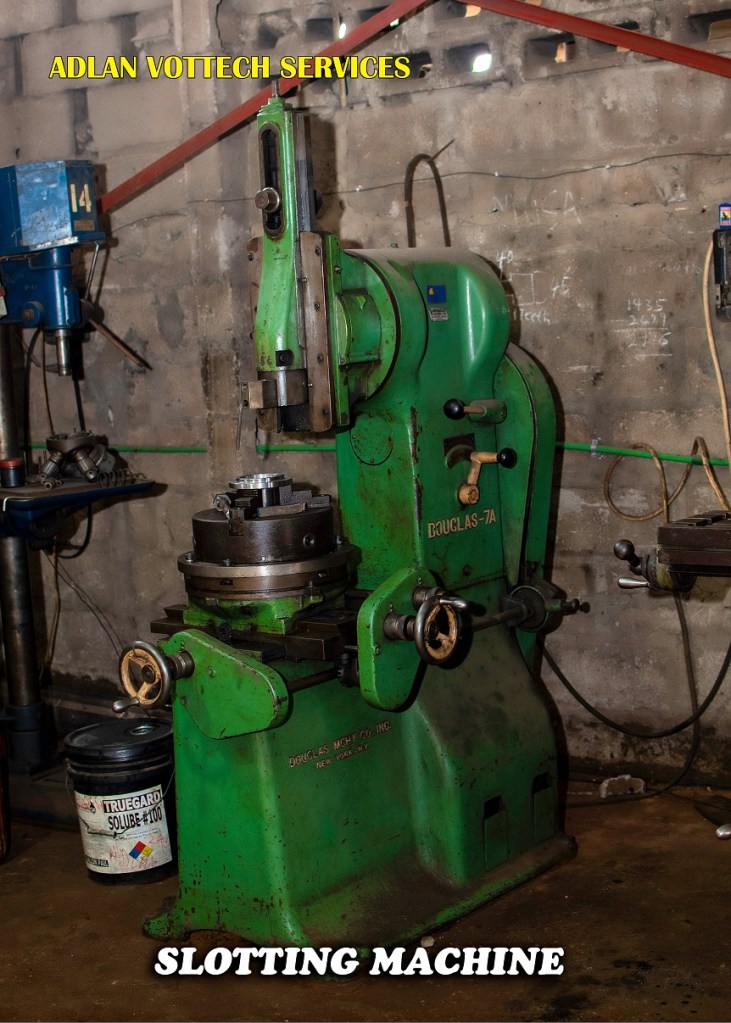
Slotting Machines
Slotting machines, also known as slotting shapers or slotting vertical machines, are specialized tools used in the steel fabrication industry for creating slots, grooves, keyways, and other intricate shapes on workpieces. They offer a precise and efficient method for machining internal and external features. Here are some of the key uses of slotting machines in a steel fabrication industry:
- Keyway Machining: Slotting machines are commonly used to cut keyways in shafts, gears, and other rotating components to accommodate keys for proper power transmission.
- Internal and External Grooving: Slotting machines can create internal and external grooves on steel components, allowing for the insertion of seals, O-rings, or other fittings.
- Internal and External Splining: Slotting machines are employed for cutting internal and external splines on shafts and gear components, enhancing rotational power transmission.
- Machining of Slots: Slotting machines are used to cut slots in various steel components, such as mounting brackets, bases, and frames, for assembly and fastening purposes.
- Cutting Dovetail Joints: In steel fabrication, slotting machines can be utilized to cut dovetail joints on parts, commonly found in fixtures, jigs, and tooling.
- Broaching Preparation: Slotting machines may be used to prepare workpieces for broaching operations, making the broaching process more efficient and accurate.
- Creating Square Holes: Slotting machines can create square or rectangular holes in steel components, suitable for specialized fasteners or inserts.
- Gearbox Components: Slotting machines are used to machine gear teeth and gearboxes’ related components, ensuring precise gear engagement.
- Die and Mold Making: In the steel fabrication industry, slotting machines can be employed in the production of dies and molds for forming and shaping operations.
- Texturing and Engraving: Slotting machines are utilized for creating textured or engraved surfaces on steel components for aesthetic or functional purposes.
- Prototyping: Slotting machines are valuable tools for creating prototypes and samples of steel components with specific slots or features before proceeding to mass production.
- Repair and Modification: Slotting machines can be used for repairing or modifying existing steel components, such as adding keyways to existing shafts or creating new grooves for different purposes.
Slotting machines provide versatility and precision in machining operations, allowing steel fabricators to create various features and shapes that are vital in many industrial applications. Their capability to produce accurate slots and grooves makes them an indispensable tool in the steel fabrication industry for enhancing the functionality and efficiency of components and assemblies
 Home
Home 