
Adlan-Vot Tech Services
A Steel & Metal Fabrication Company.
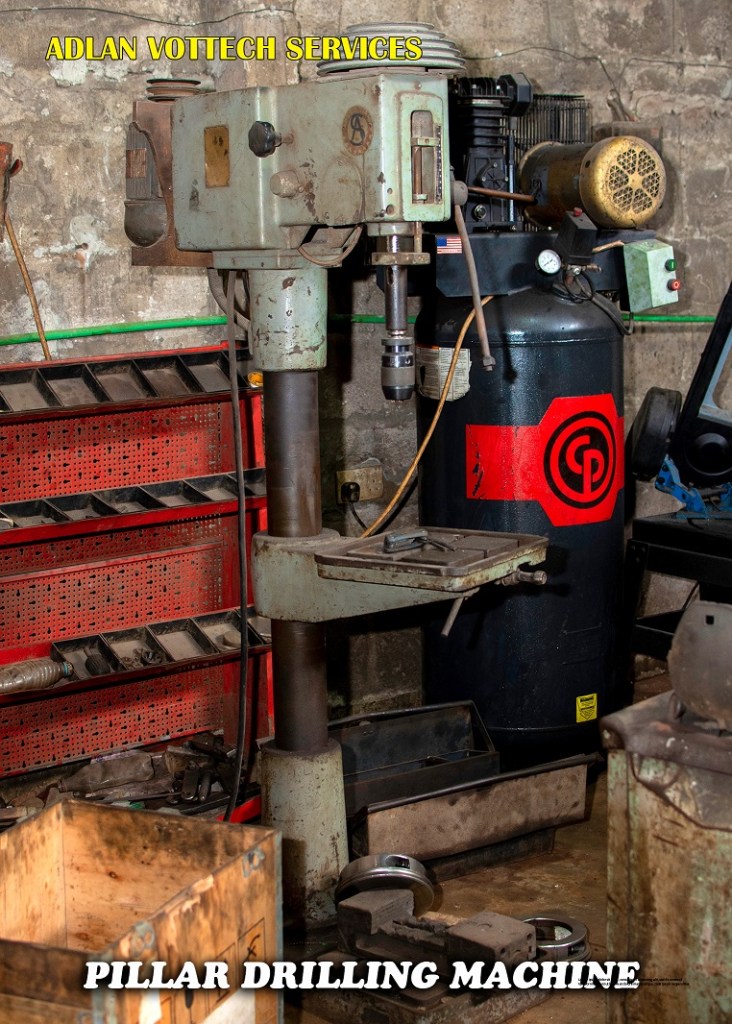
Pillar Drilling Machine
Pillar drilling machines, also known as column drilling machines, are commonly used in the steel fabrication industry for various drilling operations. These machines offer stability, precision, and the ability to handle different sizes of workpieces. Here are some of the key uses of pillar drilling machines in a steel fabrication industry:
- Hole Drilling: Pillar drilling machines are primarily used for drilling holes of various diameters in steel plates, beams, tubes, and other steel components.
- Countersinking and Counterboring: These machines can be equipped with countersinking or counterboring attachments, allowing fabricators to create recessed or enlarged holes for screw heads or bolt heads.
- Spot Facing: Pillar drilling machines can perform spot facing operations to create smooth and flat surfaces around drilled holes, ensuring proper mating of parts.
- Tapping: Some pillar drilling machines are equipped with tapping attachments, enabling the creation of threaded holes in steel components.
- Reaming: These machines can be used for reaming operations to achieve high precision and smooth surfaces in existing drilled holes.
- Precision Drilling: Pillar drilling machines are suitable for drilling holes with precise depth and alignment, crucial for accurate assembly and fit of steel components.
- Batch Drilling: In steel fabrication, pillar drilling machines are often used for batch drilling multiple identical workpieces, ensuring consistent hole placement and size.
- Drilling Jigs and Fixtures: Pillar drilling machines are used to create holes in jigs and fixtures, which are essential for holding workpieces securely during fabrication processes.
- Punching and Piercing: These machines can perform punching and piercing operations in steel sheets and plates, creating holes for various purposes.
- Creating Diametrical Holes: Pillar drilling machines are utilized to drill diametrical holes or bolt holes across the centerline of steel shafts or cylindrical components.
- Angular Drilling: Some pillar drilling machines can be adjusted for angular drilling, allowing fabricators to create holes at specific angles in steel components.
- Machining for Assembly: Pillar drilling machines play a critical role in preparing steel components for assembly by creating holes for fasteners, hinges, and other assembly requirements.
Pillar drilling machines are versatile and essential tools in the steel fabrication industry, enabling fabricators to perform a wide range of drilling operations with accuracy and efficiency. They are widely used in metalworking workshops, manufacturing plants, and construction sites to support various fabrication tasks involving steel and other materials
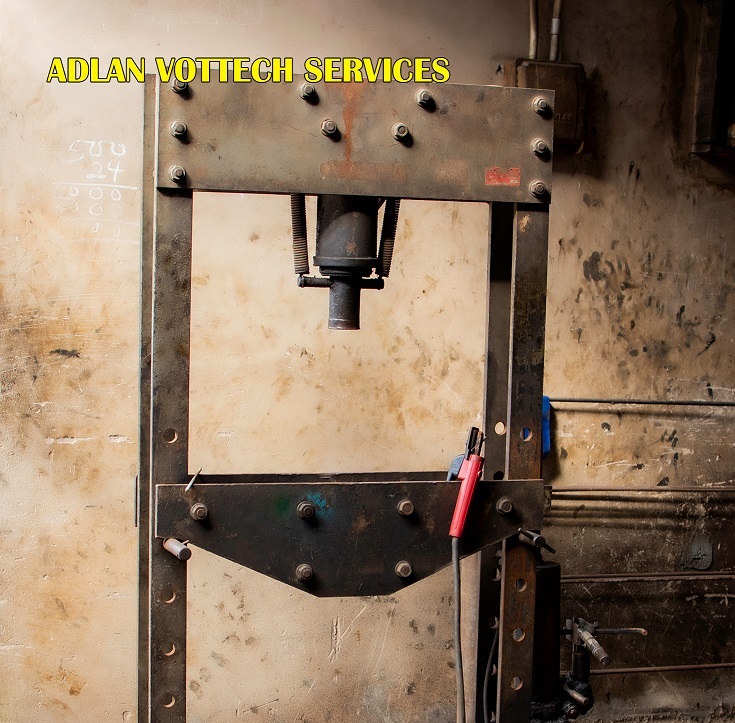
Power Press
Power presses, also known as mechanical presses, are widely used in the steel fabrication industry for various forming and shaping operations. These machines use force and motion to bend, punch, cut, and shape steel sheets and plates. Here are some of the key uses of power presses in a steel fabrication industry:
- Sheet Metal Bending: Power presses are used for sheet metal bending operations, creating V-bends, U-bends, and other complex bends in steel sheets.
- Stamping: These machines are used for stamping steel components, such as brackets, plates, and connectors, with specific shapes and designs.
- Blanking: Power presses can blank out precise shapes from steel sheets, producing components with clean and defined edges.
- Forming: These machines are used for various forming operations, such as embossing, coining, and drawing, to create desired shapes and contours on steel materials.
- Cutting and Trimming: Power presses are utilized for cutting and trimming steel sheets and plates into specific sizes and shapes.
- Piercing and Punching: These machines can punch holes or pierce openings of different sizes in steel components, such as panels and plates.
- Deep Drawing: Power presses are capable of deep drawing operations to create intricate and deep-formed components from steel sheets.
- Coining and Coining Calibration: These machines are used for coining calibration to control the thickness of the steel material in specific areas.
- Embossing and Debossing: Power presses are used for embossing or debossing designs, logos, or text on steel sheets or plates.
- Notching: These machines are employed for notching steel components to create v-shaped or u-shaped cuts.
- Flanging: Power presses are used to create flanges on steel components, allowing for easy assembly and fastening.
- Perforation: These machines can create perforations in steel sheets or plates for ventilation, drainage, or decorative purposes.
Power presses are available in various types and capacities, from small benchtop models for light-duty work to large industrial presses for heavy-duty fabrication tasks. Their versatility and ability to perform a wide range of forming and shaping operations make them essential tools in the steel fabrication industry. Proper safety precautions and operator training are crucial when using power presses to ensure safe and efficient operation.
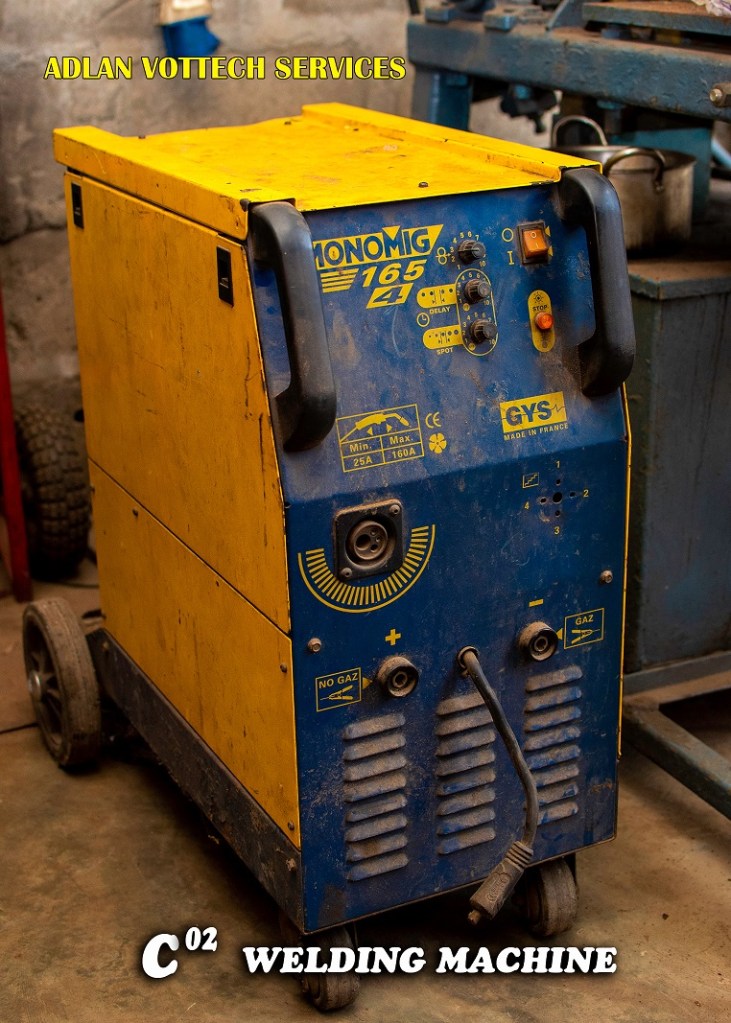
CO2 Welding Machine
CO2 welding machines, also known as MIG (Metal Inert Gas) welding machines, are widely used in the steel fabrication industry due to their versatility, ease of use, and high welding speeds. CO2 welding machines utilize a consumable wire electrode and a shielding gas (usually a mixture of carbon dioxide and other gases) to create an electric arc for joining steel components. Here are some of the key uses of CO2 welding machines in a steel fabrication industry:
- Steel Welding: CO2 welding machines are extensively used for welding steel components in various thicknesses, including steel plates, beams, tubes, and structural sections.
- Sheet Metal Fabrication: CO2 welding is commonly used in sheet metal fabrication for joining thin steel sheets, creating welded assemblies and structures.
- Construction and Structural Welding: CO2 welding machines are employed in the fabrication of structural steel components used in buildings, bridges, and other construction projects.
- Pipe Fabrication: CO2 welding machines are used to weld steel pipes, tubes, and fittings for various industrial applications, such as pipelines and plumbing systems.
- Automotive and Transportation Industry: CO2 welding is utilized in the fabrication of automotive components, trailers, and other transportation equipment.
- Agricultural Machinery: CO2 welding machines are used in the fabrication of agricultural machinery and equipment, such as tractors and implements.
- Heavy Equipment Manufacturing: CO2 welding is commonly used in the fabrication of heavy machinery and equipment, including mining machinery, earthmoving equipment, and cranes.
- Metal Furniture Fabrication: CO2 welding machines are used in the fabrication of metal furniture, such as tables, chairs, and cabinets.
- Metal Art and Sculptures: CO2 welding is used in metal art and sculptures to join steel components and create intricate designs.
- Repair and Maintenance: CO2 welding machines are used for repair and maintenance tasks in the steel fabrication industry, including repairing steel structures and equipment.
- Shipbuilding: CO2 welding is employed in the fabrication of steel components and structures for ships and marine vessels.
- Container and Tank Fabrication: CO2 welding machines are used in the fabrication of steel containers, tanks, and storage vessels.
CO2 welding machines offer fast and efficient welding, making them popular in various steel fabrication applications. They provide high-quality welds and are suitable for both light-duty and heavy-duty welding tasks. Proper training and safety measures are essential when using CO2 welding machines to ensure the welder’s safety and produce high-quality welds.
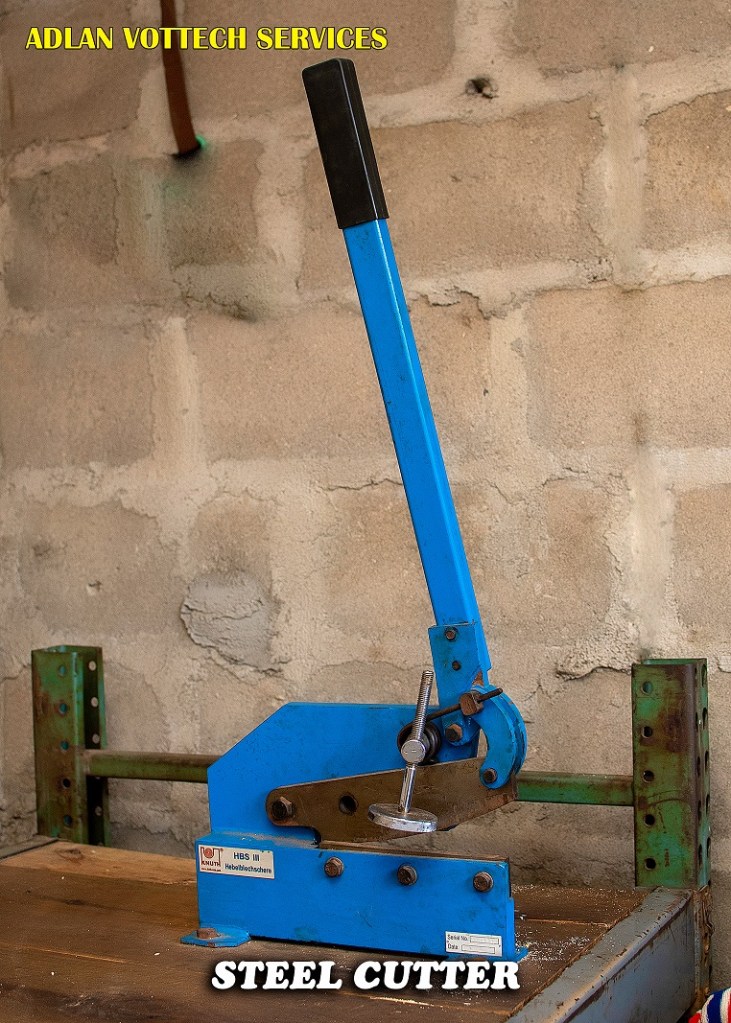
Steel Cutter
Steel cutters, also known as metal cutting shears or metal cutting machines, are essential tools in the steel fabrication industry for precisely cutting and shaping steel components. These cutting machines are designed to handle various thicknesses of steel and make the fabrication process more efficient and accurate. Here are some of the key uses of steel cutters in a steel fabrication industry:
- Sheet Metal Cutting: Steel cutters are used to cut large sheets of steel into smaller, more manageable sizes, which can then be used for various fabrication processes.
- Plate Cutting: Steel plates of different thicknesses can be cut to specific dimensions using steel cutters, allowing fabricators to obtain the required plate sizes for various projects.
- Structural Steel Cutting: Steel cutters are used to cut steel beams, channels, angles, and other structural steel components to precise lengths for construction and fabrication purposes.
- Pipe and Tube Cutting: Steel cutters can cut steel pipes and tubes to specific lengths, preparing them for welding, assembly, or installation.
- Trimming and Shaping: Steel cutters are employed to trim and shape steel components to meet design specifications and requirements.
- Notching: Steel cutters can create notches in steel plates and profiles, allowing for the fitting of other components or parts.
- Precise Cutting of Complex Shapes: Steel cutters with advanced features can make precise cuts on intricate and complex shapes, enabling fabricators to create specialized components.
- Curved Cutting: Some steel cutters can be used for cutting curved shapes and profiles in steel materials, providing flexibility in design and fabrication.
- Batch Cutting: Steel cutters are used for batch cutting multiple identical components, ensuring uniformity and consistency in the fabrication process.
- Prototype Development: Steel cutters are valuable tools for quickly creating prototypes and samples of steel components before mass production.
- Metal Sculpting and Artwork: Steel cutters are used in metal sculpting and artwork to cut and shape steel materials into artistic designs and sculptures.
- Repair and Modification: Steel cutters are utilized in the repair and modification of existing steel components, allowing fabricators to cut and replace damaged sections.
Steel cutters come in various types and sizes, including manual shears, hydraulic shears, and CNC-controlled cutting machines. They significantly enhance the efficiency and accuracy of cutting operations in the steel fabrication industry, enabling fabricators to achieve precise shapes and sizes for various applications. Proper safety measures, operator training, and maintenance are essential for safe and effective use of steel cutters in the steel fabrication process.
 Home
Home 